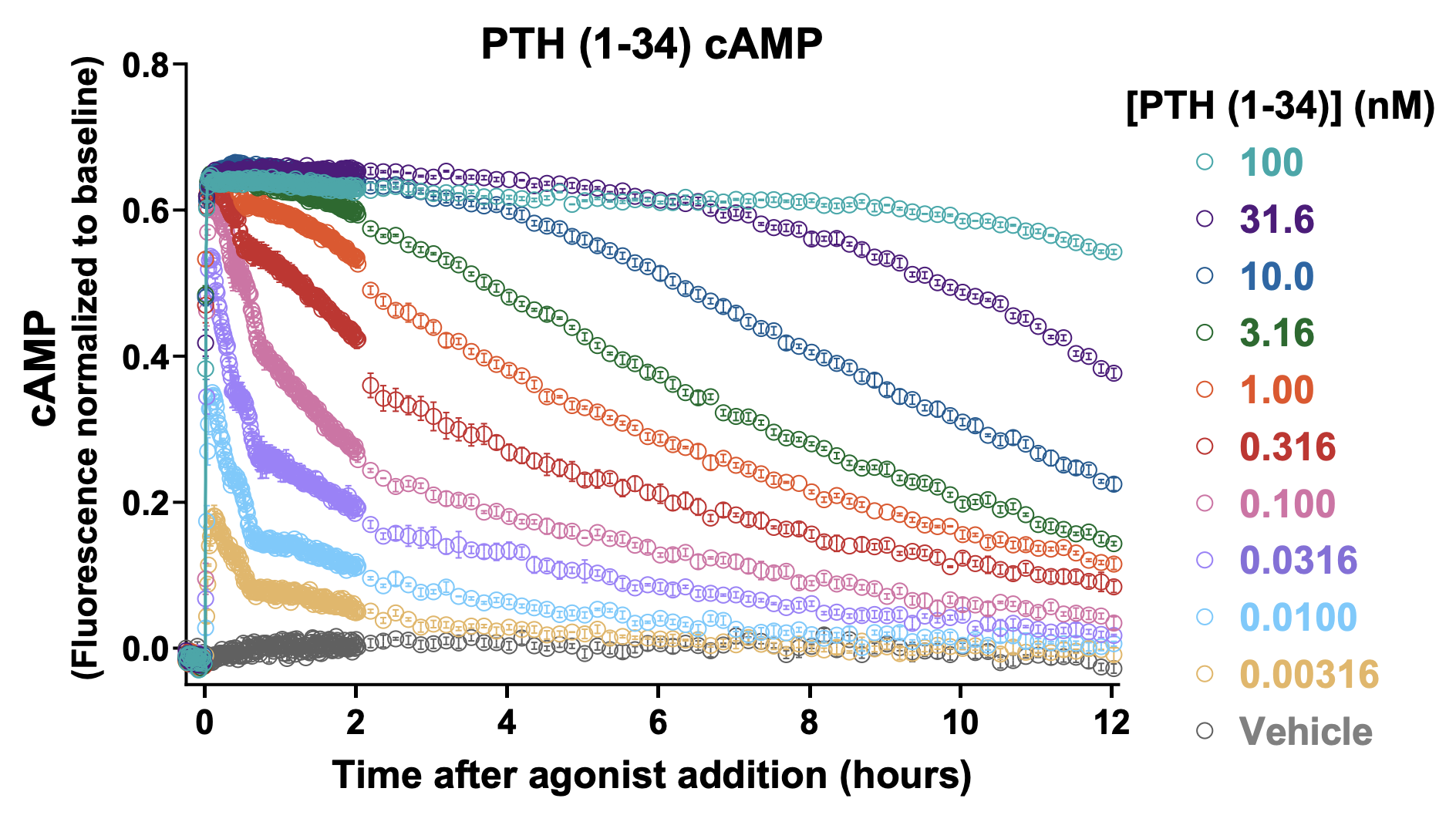
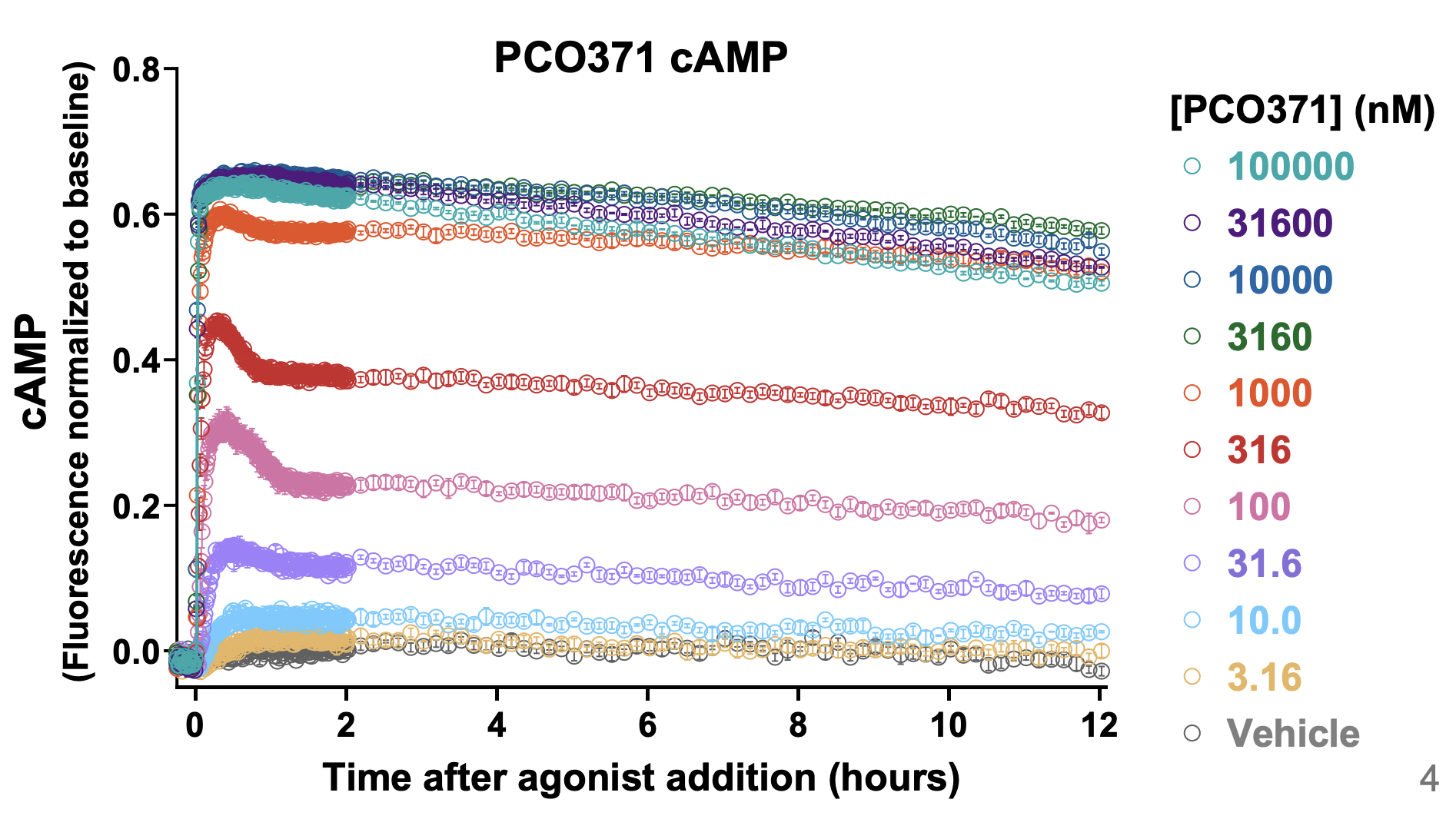
Sustained vs. Transient cAMP Signaling: While all ligands reached a cAMP peak within minutes, the response to the reference peptide PTH (1-34) declined rapidly while LA-PTH and the small molecule PCO371 maintained sustained signaling throughout the 12-hour period.
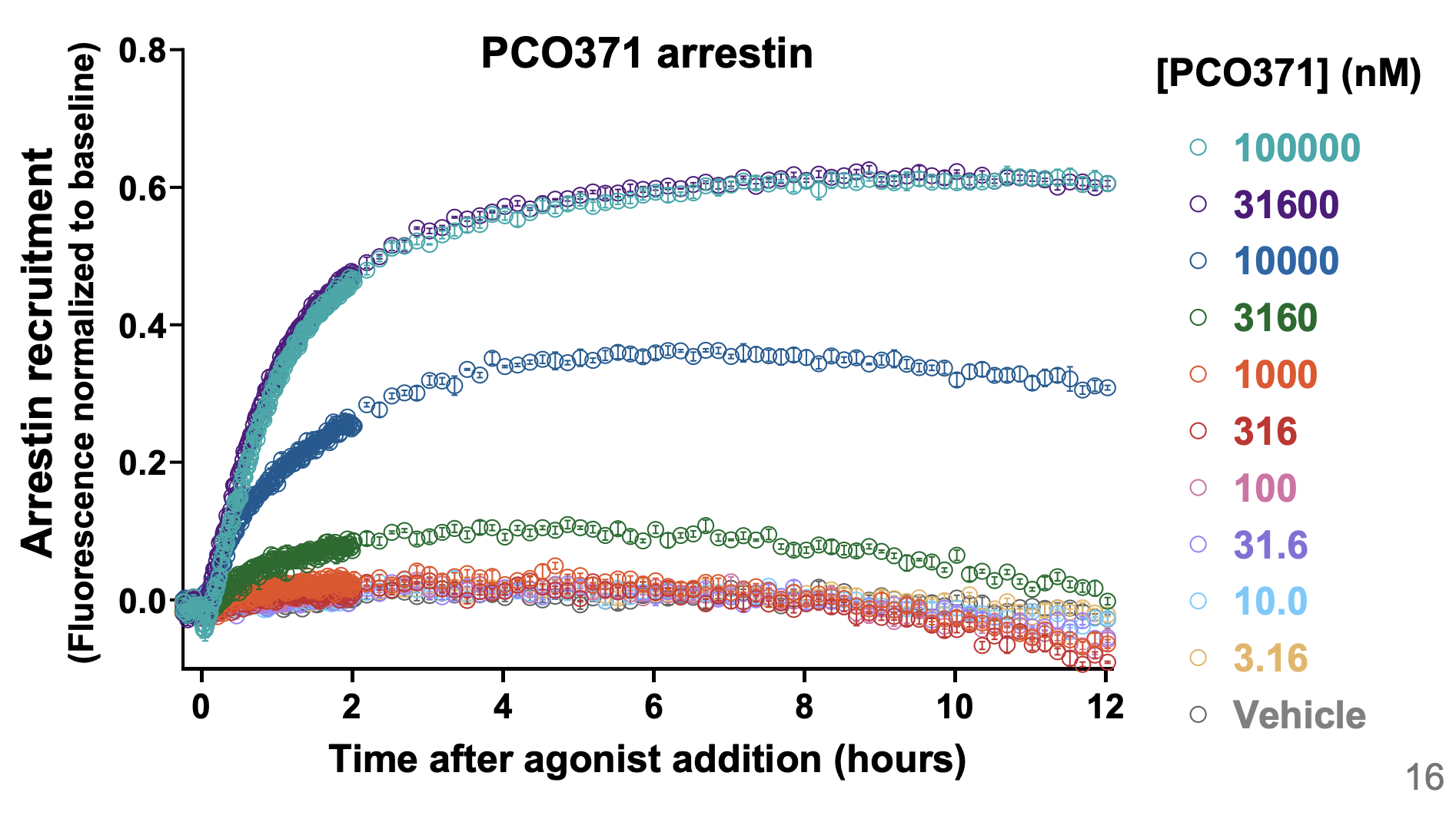
PCO371’s Time-Dependent Bias: PCO371 “slow-motion” profile, appearing strongly cAMP-biased at 5 minutes with no detectable arrestin recruitment, but slowly evolving into a strong arrestin recruiter by the 12-hour mark.
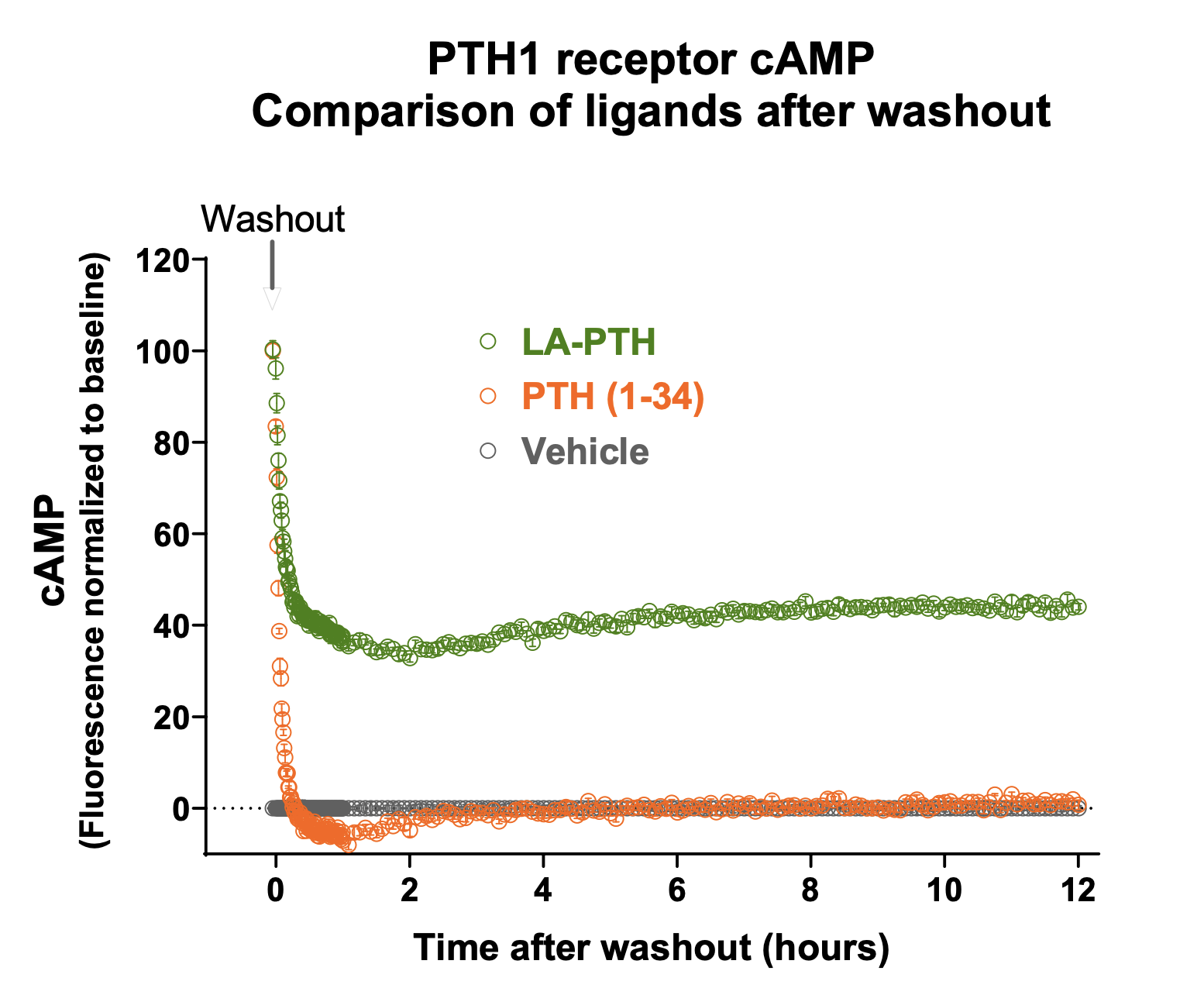
Persistent Signaling After Washout: After washout, LA-PTH maintained approximately 45% of its cAMP signal for the full 12-hour duration, whereas PTH (1-34) returned to baseline levels within an hour. These 12 hours readouts give us new understanding of agonist efficacy, bias, and persistence.
cAMP Signaling:
Real time cAMP generation and degradation was measured in HEK293 cells using the Green Downward cADDis fluorescent cAMP biosensor.
cAMP was measured for 12 hours in the continuous presence of the peptides PTH (1-34) and LA-PTH, and the small molecule PCO371.
cAMP rose rapidly to a peak within 30 minutes for all three ligands.
The cAMP response declined over time for PTH (1-34) but was sustained for 12 hours for both LA-PTH and PCO371.
The change of activity over time was quantified as the shift of EC50 from the peak to 12 hours. The minimal shift for PCO371 (1.6 fold) indicated profoundly sustained signaling for this agonist.
Arrestin Signaling:
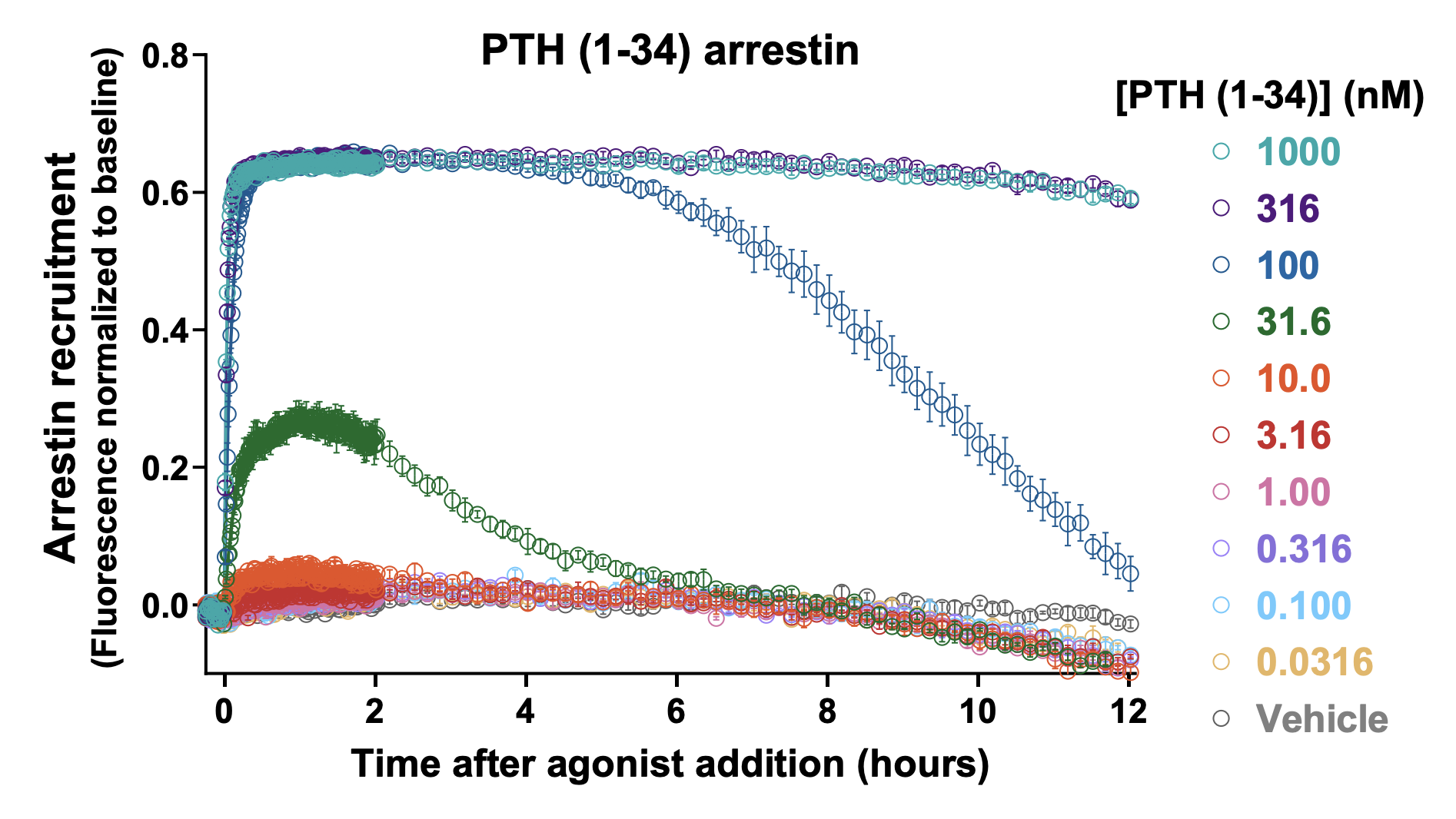
Arrestin recruitment by the PTH1 receptor was measured in HEK293 cells using the Borealis beta-arrestin2 / arrestin3 fluorescent biosensor.
Arrestin recruitment was measured for 12 hours in the continuous presence of the peptides PTH (1-34) and LA-PTH, and the small molecule PCO371.
Recruitment was rapid for the peptides, approaching the maximum within an hour. However recruitment was much slower for PCO371, requiring several hours to approach maximum.
PCO371 was a full agonist for arrestin recruitment at a late time point (12 hours) but was almost inactive at an early time point (5 minutes), indicating time – dependence of activity and biased agonism.
Arrestin recruitment declined after peaking for PTH (1-34) but was more sustained for LA-PTH and PCO371.
PTH1 cAMP following agonist washout:
cAMP generation by the PTH1 receptor following agonist washout was measured in HEK293 cells using the Green Upward cADDis fluorescent cAMP biosensor.
cAMP was measured for 12 hours after washout of the peptides PTH (1-34) and LA-PTH.
cAMP declined rapidly to baseline for PTH (1-34) (within an hour).
For LA-PTH, approximately 45% of the cAMP signal was sustained after washout, with the response persisting largely unchanged for the 12 hour time course.