
TLC
TRPML1 Lysosomal Calcium Sensor
A genetically encoded calcium sensor for monitoring TRPML1 activity and lysosomal Ca2+ release
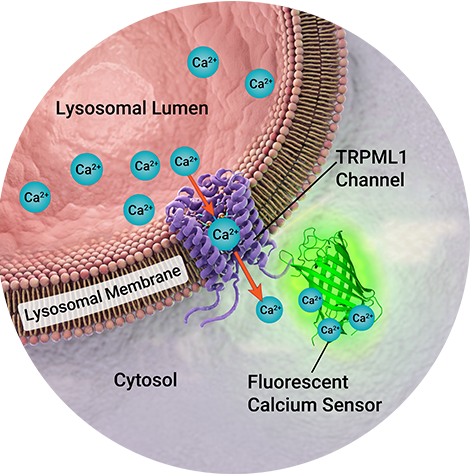
The TRPML1 GECO biosensor is a green Ca2+ sensor fused to the cytoplasmic side of the TRPML1 channel.
Transient receptor potential mucolipin-1 (TRPML1) is a lysosomal ion channel that regulates Ca2+ release from the lysosome. TRPML1-mediated Ca2+ signaling has been implicated in lysosomal function, autophagy, membrane trafficking, cellular metabolism, and disease.
Our TRPML1 calcium sensor provides a genetically encoded approach to monitor Ca2+ dynamics associated with TRPML1 activity in live cells. Our sensor is designed to provide a direct fluorescent readout of TRPML1-associated Ca2+ signaling, enabling researchers to monitor changes dynamically in living cells.
The TLC sensor is bright enough to be used on standard plate readers in drug discovery because TRPML1 is an emerging drug target for neurodegenerative diseases, breast and lung cancer, and potentially viral infections.
- Genetically encoded — expresses in cell line of choice, primary neurons, iPSC-derived cell types, and immortalized cell lines; no exogenous dye loading or washout steps.
- BacMam delivery — fast, efficient, dose-controlled transduction across a broad range of mammalian cell types, including cells that are difficult to transfect.
- Live-cell, real-time — track dynamics from seconds or hours to days, not a single fixed snapshot.
- TRPML1–targeted — The GECO biosensor is a green Ca2+ sensor fused to the cytoplasmic side of the TRPML1 channel, distinct from cytosolic or ER Ca2+ pools.
- Screen in 384 well format or resolve single cell lysosomes — Same virus, same cells, no reoptimization. Plate reader and microscope compatible.
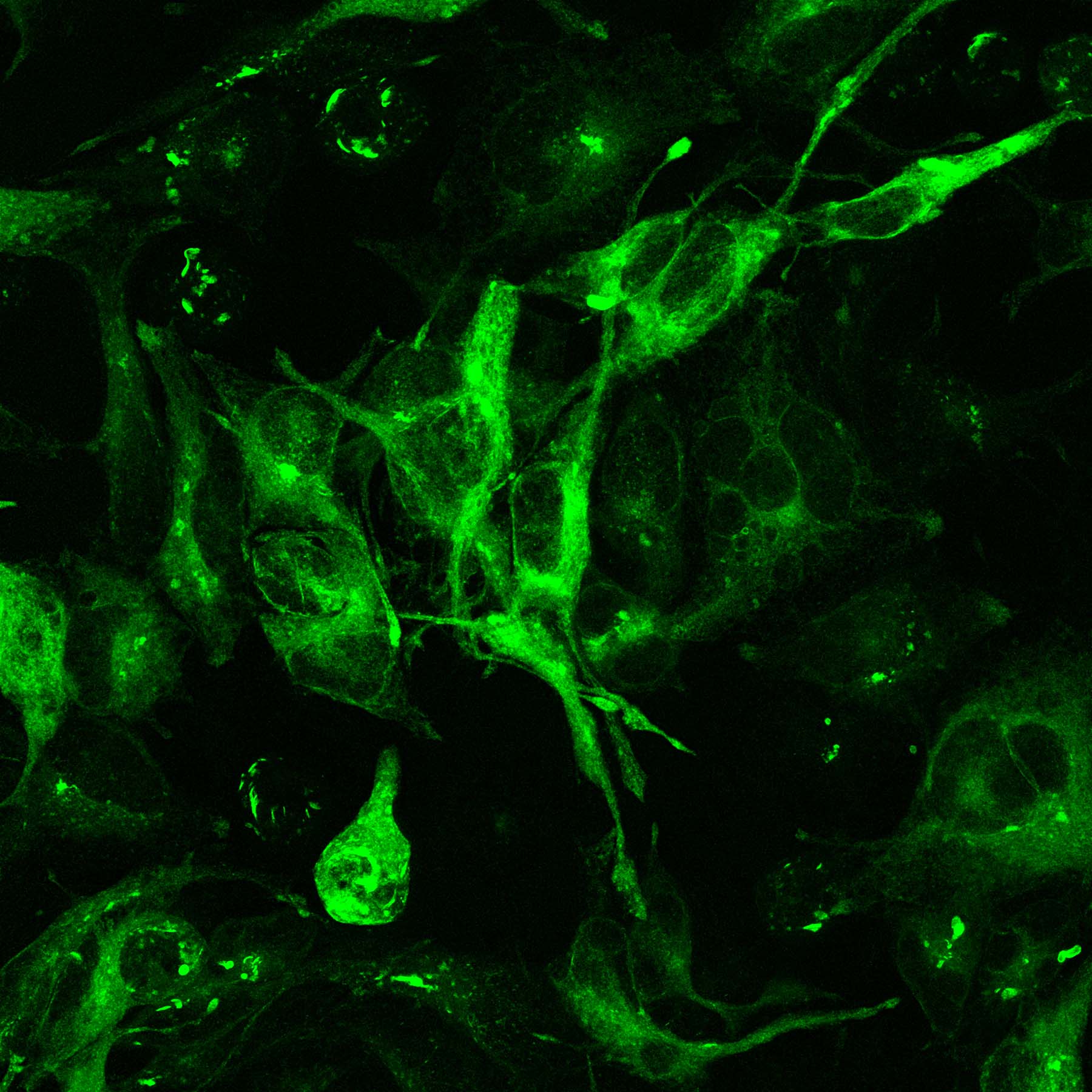

Application of known TRPML1 agonists results in persistent and robust activation, confirming TRPML1 functionality. Tested the TLC sensor in HEK293T cells and stimulated with known agonists of TRPML1.
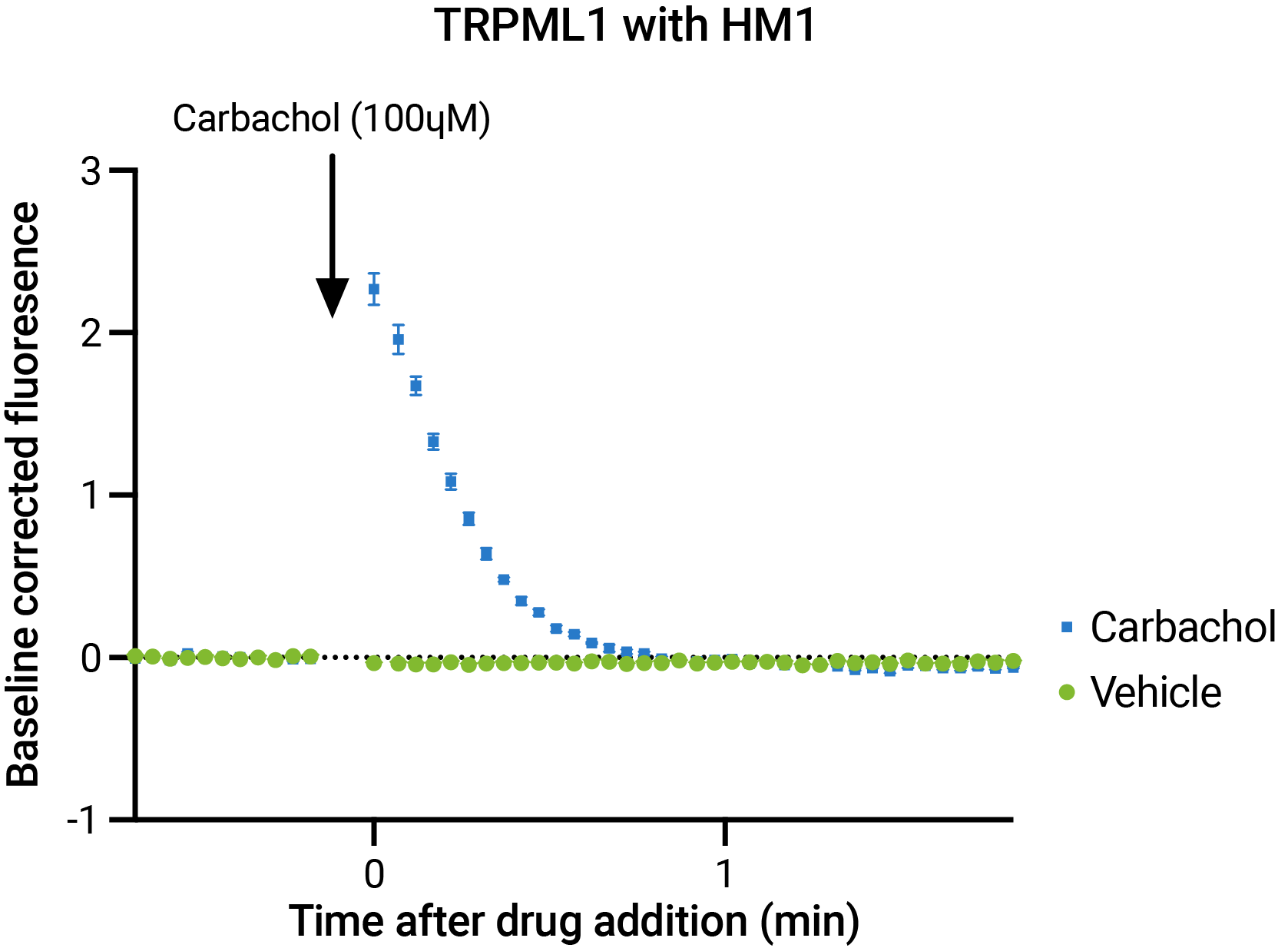
The TLC sensor detects Ca2+ release from the ER caused by activation of the muscarinic receptor.
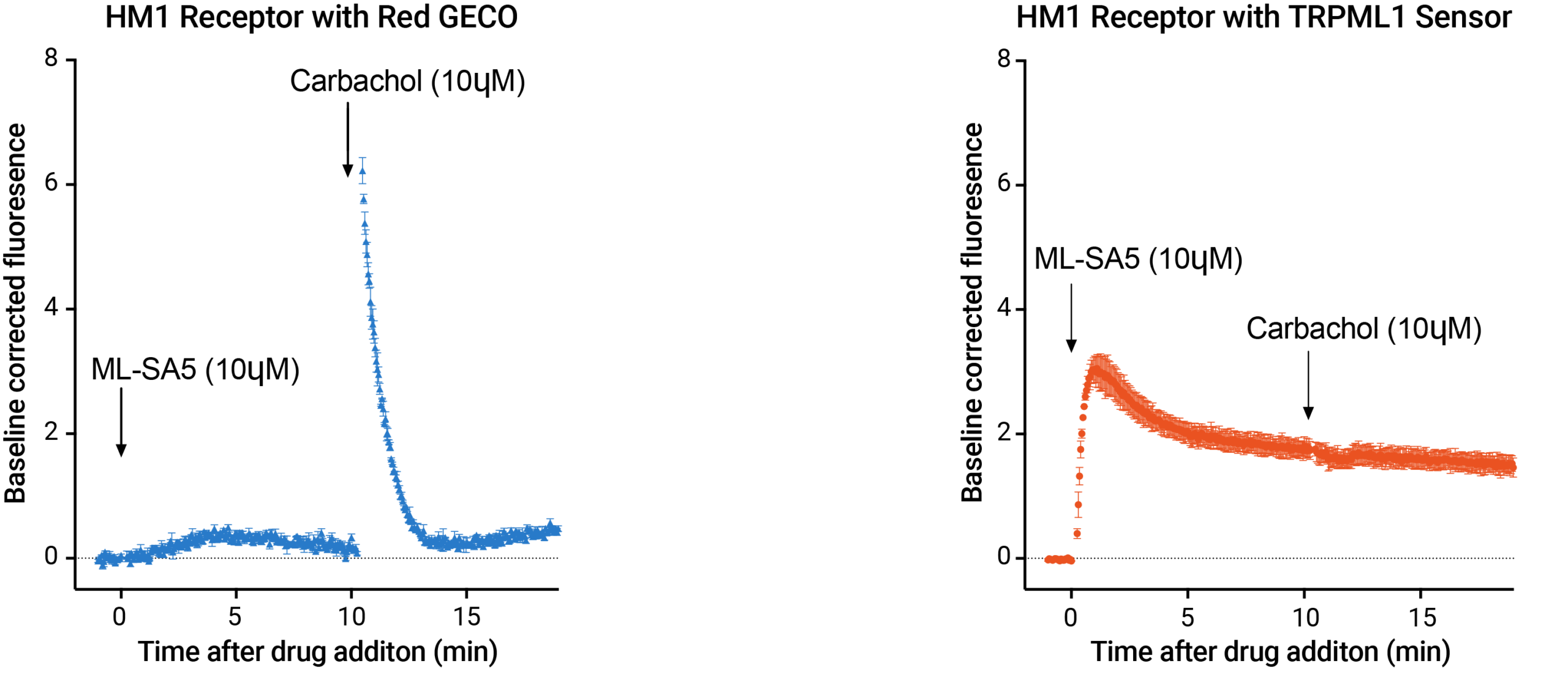
Cytosolic calcium and lysosomal calcium respond differently to the same drugs. HEK293T cells were transduced with either the Red GECO or TLC sensor and HM1. Both were stimulated with MLSA5 and carbachol. The cytosolic response to carbachol stimulation was greater than the TLC response, while the TLC response to ML-SA5 was significant compared to the cytosolic sensor.
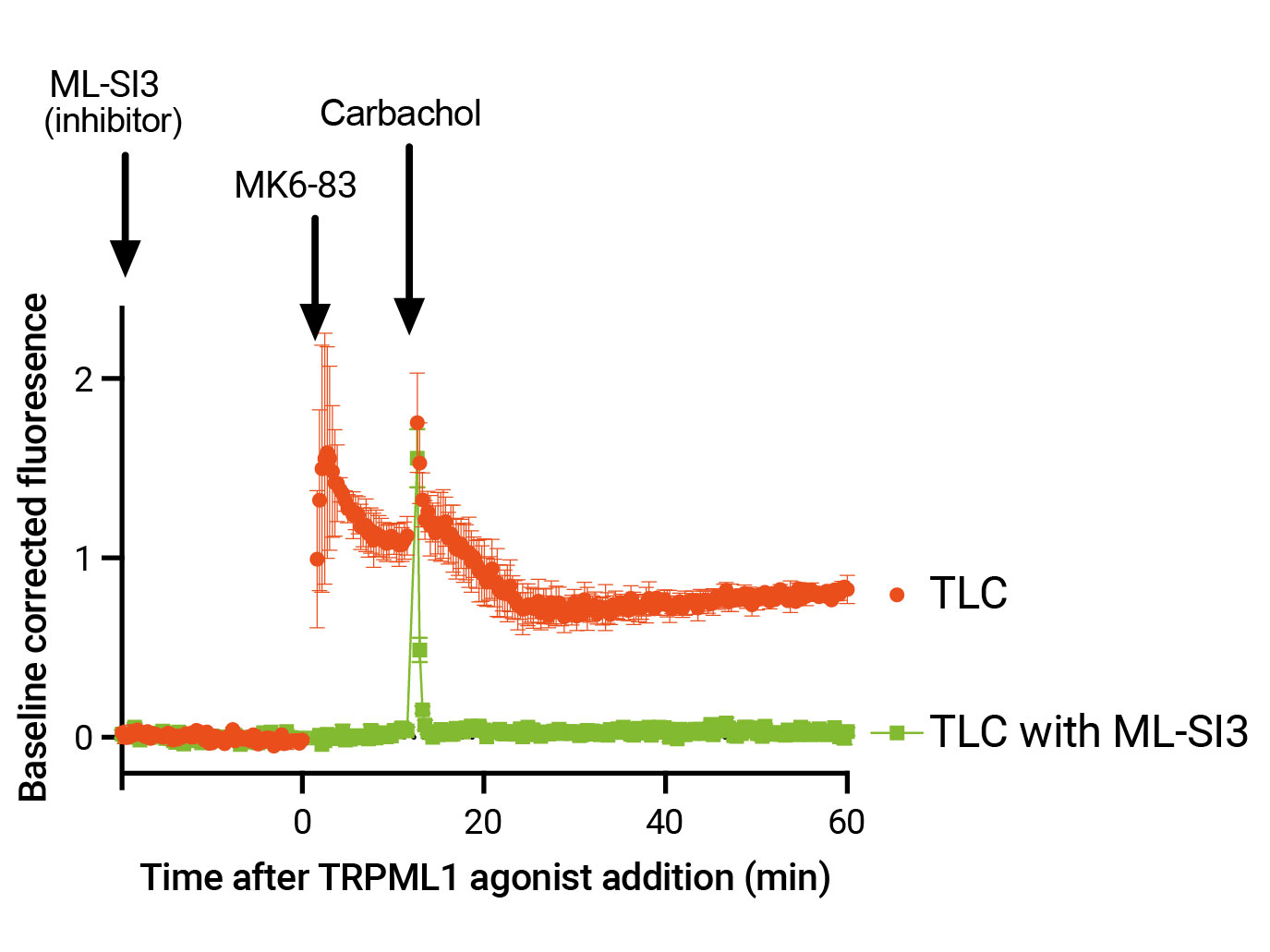
TRPML1 inhibitor (ML-SI3) blocks the TRPML1 agonist (MK6-83) stimulated Ca2+ response but does not abolish the calcium response from carbachol. The addition of the inhibitor completely blocked the MK6-83 triggered Ca2+ release, but not the ER Ca2+ release triggered by activation of the muscarinic receptor.

Fluorescent biosensor TLC measures Ca2+ response to the addition of agonist MK6-83. HEK293T cells were transduced with TLC and stimulated with known agonist MK6-83 at varying concentrations.

TRPML1-Lysosomal-Ca2+ sensor (TLC) for the Ca2+ Dyshomeostasis Neurodegeneration Model
Here we present a genetically encoded TRPML1 Lysosomal Ca2+ (TLC) sensor that enables direct measurement of Ca2+ release with high specificity. Using this tool we show that small molecule agonists differ in their ability to selectively activate TRPML1, with MSK-83 demonstrating higher specificity compared to ML-SA5. The Assay provides a powerful approach for interrogating TRPML1 function in human cells and for identifying modulators of lysosomal Ca2+ signaling.
Perturbed Ca2+ signaling leads to synaptic loss, amyloid and tau aggregation, mitochondrial dysfunction, lysosomal alkalinization, and superoxide production, all of which are hallmarks of neurodegenerative diseases. Evidence from Alzheimers models suggest that ER-derived Ca2+ signals disrupt mitochondria-lysosome interactions, further exacerbating cellular stress.
Targeted GECO Calcium Assay Kits
Showing all 2 results

 Calcium Assays, GPCR Assays, Targeted GECO Calcium
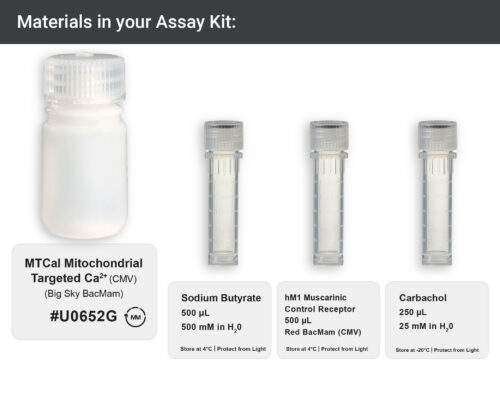
MTCal-Mitochondria-Targeted G-GECO Ca2+ Assay Kit – Big Sky (U0652G)
$995.00Select options This product has multiple variants. The options may be chosen on the product page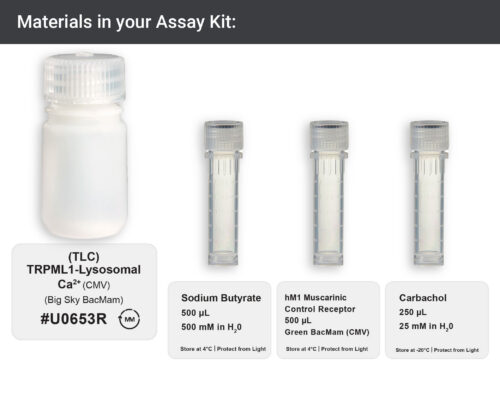 Calcium Assays, GPCR Assays, Targeted GECO Calcium
TRPML1-Targeted G-GECO Ca2+ Assay Kit – Big Sky (U0653G)
Read more
Shop Other Assay Kits by Category

Products
GPCRs in BacMam Virus
Targeted GECO Ca2+
mNeonGreen BacMam Tools
Product U0652G
Products U0221R & D0221G
Product U0654G
Product P1040G
Product P1010G
MitoPaint COX8
Products U0261G , U0262G, U0267G, U0266G
Products U0241R, D0241G, U0267G, D0231G
Product D0331G
CAAX